
What is an EPC?
An Energy Performance Certificate, or EPC, is a document that provides information about the energy efficiency of a home.
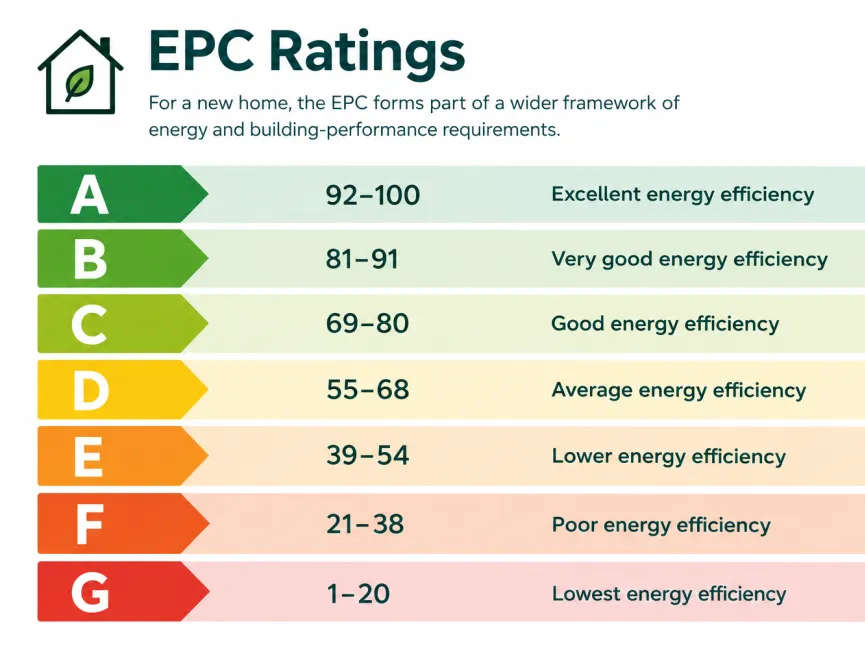
A domestic EPC gives a property an Energy Efficiency Rating (EER) on a scale from A to G:
- A – most energy efficient
- B
- C
- D
- E
- F
- G – least energy efficient
The rating is based on the characteristics of the property, including factors such as insulation, heating systems, windows and other energy-related features. The assessment produces a numerical score which is then placed into one of the A–G bands.
What do the EPC ratings mean?
The higher the EPC rating, the more energy efficient the property is considered to be. Generally, a higher rating is associated with lower estimated energy use and lower carbon emissions, although your actual energy bills will depend on factors such as how you use your home, energy prices and the number of people living there.
Why does an EPC rating matter when buying a new home?
Energy efficiency can affect the way a home feels and performs day to day.
A more energy-efficient home can help to:
Use less energy
Energy-efficient design and building systems can reduce the amount of energy needed to heat, light and operate your home.
Reduce estimated energy costs
EPC ratings are based partly on estimated energy performance, so a higher-rated home will generally have lower estimated energy use than a less efficient property. Your actual bills will vary depending on how you use your home and the energy tariffs available to you.
Create a comfortable home
Insulation, glazing and efficient heating systems can all play a role in helping a home maintain a comfortable temperature.
Reduce carbon emissions
Energy-efficient homes generally require less energy, which can help reduce associated carbon emissions.
What EPC rating can I expect from a new-build home?
New homes generally perform better in EPC assessments than existing homes.
The latest government statistics show that 68% of new dwellings in England received an EPC Energy Efficiency Rating of B between April and June 2026. By comparison, existing homes were much more concentrated in bands C and D.
This reflects the energy-efficiency standards that apply to new homes, as well as the design, construction and systems used in modern properties.
However, there is no single EPC rating for every new-build home. The rating depends on the individual property's design, specification, size, orientation, services and other characteristics.
For this reason, we recommend checking the EPC for the particular Hill home you're interested in.
What does an EPC assess?
An EPC considers a range of features that influence the energy performance of a property.
These can include:
Insulation
The construction and insulation of elements such as walls, roofs and floors can affect how much heat is retained within a home.
Windows and doors
Glazing and the thermal performance of windows and doors can influence heat loss and energy performance.
Heating and hot water
The type and efficiency of the heating and hot-water systems are considered as part of the assessment.
Lighting
The energy efficiency of fixed lighting is also taken into account.
Renewable and low-carbon technologies
Where relevant, technologies such as solar photovoltaic panels can contribute to a property's energy performance.
An EPC assessor uses information about the property's construction and energy-related systems to calculate its energy performance using the government's approved methodology.
How long does an EPC last?
An EPC is generally valid for 10 years.
A new EPC may be produced when a new home is completed, and the certificate relates to the individual property rather than the housebuilder as a whole.
For a Hill home, the relevant EPC and rating should therefore be considered alongside the specification for that particular property.
EPCs and new-build homes
For a new home, the EPC forms part of a wider framework of energy and building-performance requirements.
In England, Approved Document L provides guidance supporting the Building Regulations requirements relating to energy and greenhouse gas emissions. The government published a new 2026 edition of Approved Document L in March 2026.
The methodology used to calculate the energy performance of new buildings in England has also been updated, including the move from SAP 10.2 to SAP 10.3.
This means that when considering the energy performance of a new home, it's important to look at the standards applicable to when that particular development was designed and constructed.